WAHR Inspections in Stoke-on-Trent
Stoke-on-Trent is the World Capital of Ceramics, awarded UNESCO World Craft City status in 2024. Major pottery brands including Wedgwood, Emma Bridgewater, Portmeirion, and Burleigh still manufacture here. Etruria Valley and the surrounding six towns retain a concentrated ceramics and manufacturing cluster.
About WAHR Inspections in Stoke-on-Trent
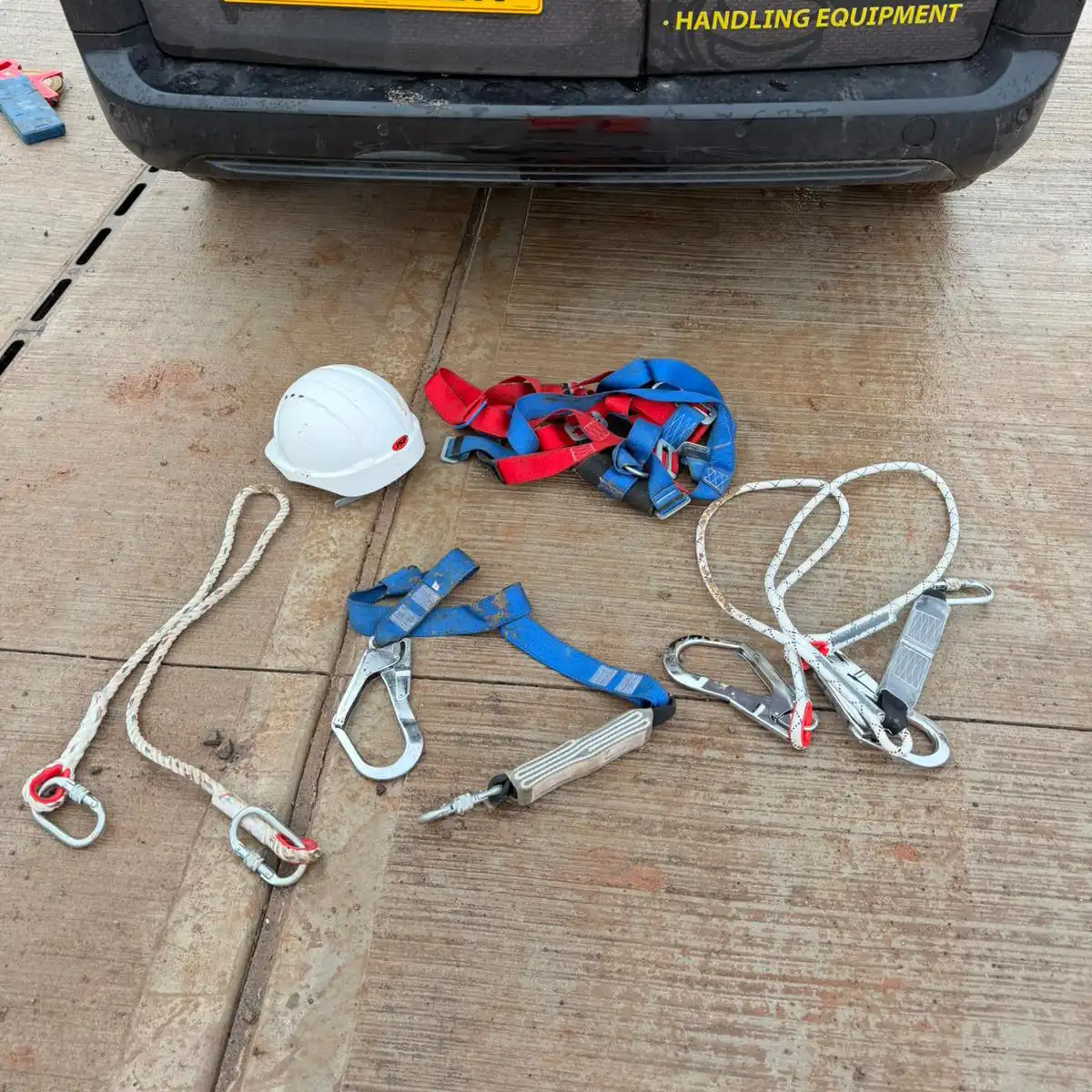
Stoke-on-Trent's combination of active construction, industrial maintenance, and commercial property management creates widespread demand for safe working at height across all six towns. The Work at Height Regulations 2005 apply wherever workers face a risk of falling, and Safe-Lee Inspection & Consultancy provides WAHR inspections throughout Stoke-on-Trent to help employers protect their workforce. The city's ongoing regeneration, including developments around Hanley city centre, the Etruria Valley corridor, and residential schemes across the borough, generates continuous scaffolding demand, and our engineers inspect these structures against current TG20 and SG4 standards, checking tie spacing, board condition, structural adequacy, and access arrangements. The ceramics manufacturers, including Wedgwood, Emma Bridgewater, and Burleigh, operate in premises where kiln maintenance, roof access, and elevated plant servicing require harnesses, anchor points, and mobile elevated work platforms that must be rigorously inspected. Warehousing and distribution centres around Festival Park and Sideway Industrial Estate contain mezzanine floors and high-bay racking where fall protection and edge protection are essential. Burslem Business Park and Tunstall Industrial Area include multi-storey industrial premises with elevated working areas. Stoke-on-Trent's heritage buildings, including the bottle kilns and Victorian pottery works that characterise the city, present particular work at height challenges during restoration and maintenance. Personal fall protection equipment, including harnesses, lanyards, self-retracting lifelines, and fall arrest blocks, is inspected for condition, correct assembly, and remaining service life. We also examine ladders, tower scaffolds, podium steps, and MEWPs used by maintenance teams and contractors across the city. The Etruria Industrial Museum area exemplifies the heritage structures requiring careful height access. Safe-Lee Inspection & Consultancy is based in Irlam and serves Stoke-on-Trent via the M6, providing thorough WAHR inspection reports and practical compliance guidance.
Key Areas We Cover
- Etruria Valley
- Festival Park
- Sideway Industrial Estate
- Burslem Business Park
- Tunstall Industrial Area
Local Landmarks
Etruria Industrial Museum, preserved steam-powered pottery works, commemorating Josiah Wedgwood's industrial legacy
What Work at Height Regulations 2005 requires of you
Under the Work at Height Regulations 2005, employers and duty holders are legally required to ensure equipment is thoroughly examined by a competent person at regular intervals. Failure to comply can result in significant fines, enforcement action, and, most importantly, puts your workforce at serious risk.
Stoke-on-Trent is the World Capital of Ceramics, awarded UNESCO World Craft City status in 2024. Major pottery brands including Wedgwood, Emma Bridgewater, Portmeirion, and Burleigh still manufacture here. Etruria Valley and the surrounding six towns retain a concentrated ceramics and manufacturing cluster.
Work at Height Regulations 2005 compliance is not optional
Our WAHR Inspections Process
How we work with WAHR Inspections clients across Stoke-on-Trent: from first contact to ongoing compliance.
- 1
Initial Consultation
We talk through what equipment you hold, how it is used and which regulations bite on it. That conversation sets the scope, and it is what makes a quote a real figure rather than a guess.
- 2
Site Survey
An engineer visits to confirm what is actually on site against what was described, and to identify anything needing immediate attention. Sites often hold more equipment than the office records show, and this is where that surfaces.
- 3
Thorough Examination
The examination itself is hands-on rather than a walk round, carried out to the standard the relevant regulation sets. Each item is assessed on its own and recorded individually, including accessories stored away from the machine.
- 4
Report & Recommendations
You receive a written report identifying every defect found, classified by how urgently it must be put right, with the date the next examination falls due. Anything dangerous is raised with you on site the same day rather than held back for the paperwork.
- 5
Ongoing Support
Once the first examination is done we hold the due dates and flag them before they lapse. Most compliance failures are diary failures rather than equipment failures, so that is the part worth automating.
Industries Requiring WAHR Inspections in Stoke-on-Trent
We work with businesses of all sizes across a wide range of sectors.
Manufacturing
Stoke-on-Trent, the World Capital of Ceramics, is home to Wedgwood, Portmeirion, Emma Bridgewater, and Burleigh, all operating kilns, compressed air systems, and glaze-handling equipment requiring PSSR, PUWER, and COSHH LEV inspections.
Food & Beverage
Stoke-on-Trent's food manufacturing sector operates from industrial estates around Festival Park and Sideway, using steam boilers, pressure cookers, and extraction ventilation requiring PSSR and COSHH LEV inspections.
Construction
The regeneration of former pottery sites including the Spode Works creative village and Etruria Valley redevelopment generate demand for WAHR inspections of scaffolding and fall protection systems.
Logistics & Warehousing
Distribution centres around the A500 corridor and Festival Park use forklifts, goods lifts, and pallet racking systems requiring regular LOLER and PUWER inspections.
Frequently Asked Questions
What pressure system inspections do ceramics kilns require?
Modern ceramics kilns in Stoke-on-Trent that operate gas-fired pressure systems require PSSR inspections of their burner supply systems, gas trains, and any associated pressurised components. Pottery factories also commonly use compressed air systems for glaze spraying and pneumatic machinery, which fall within the scope of PSSR 2000 and require Written Schemes of Examination.
What does a WAHR inspection involve?
A WAHR inspection involves examining all work at height equipment for defects, damage, and suitability. This includes checking structural integrity, testing safety mechanisms, verifying correct assembly, and ensuring equipment meets the requirements of the Work at Height Regulations 2005.
How often is a WAHR inspection required?
Work at height equipment must be inspected before each use by the user, and must undergo a formal inspection by a competent person at regular intervals. The frequency depends on the type of equipment and the conditions of use, scaffolding requires inspection at least every 7 days when in use, while other equipment such as harnesses and lanyards typically require formal examination every 6 to 12 months.
What equipment does a WAHR inspection cover?
WAHR inspections cover scaffolding, mobile elevated work platforms (MEWPs), ladders, stepladders, roof ladders, safety harnesses, lanyards, fall arrest systems, guardrails, safety nets, and any other equipment used to prevent or mitigate falls from height.
What Our Clients Say
“Lee is a fantastic engineer and very approachable. He delivers examinations with minimal disturbance to your operations in a timely manner. If you need or are unsure if your equipment requires an examination, contact Lee and he will guide you through the process of becoming and staying compliant.”
Lee Stanaway
Reviewed on Google
“Brilliant company! Can't recommend Lee enough. Great communication throughout and speedy reporting to ensure kit is compliant with LOLER and PUWER.”
Thomas Bullivant
Reviewed on Google
“Great service, very knowledgeable regarding my lifting equipment. If you're needing a LOLER examination carried out, get on to Safe Lee!”
Sean Crawford
Reviewed on Google
WAHR Inspections in Nearby Areas
We also provide wahr inspections services in these nearby locations.
Other Services in Stoke-on-Trent
Need WAHR Inspections in Stoke-on-Trent?
Speak to our experienced engineers today for a free, no-obligation quote.