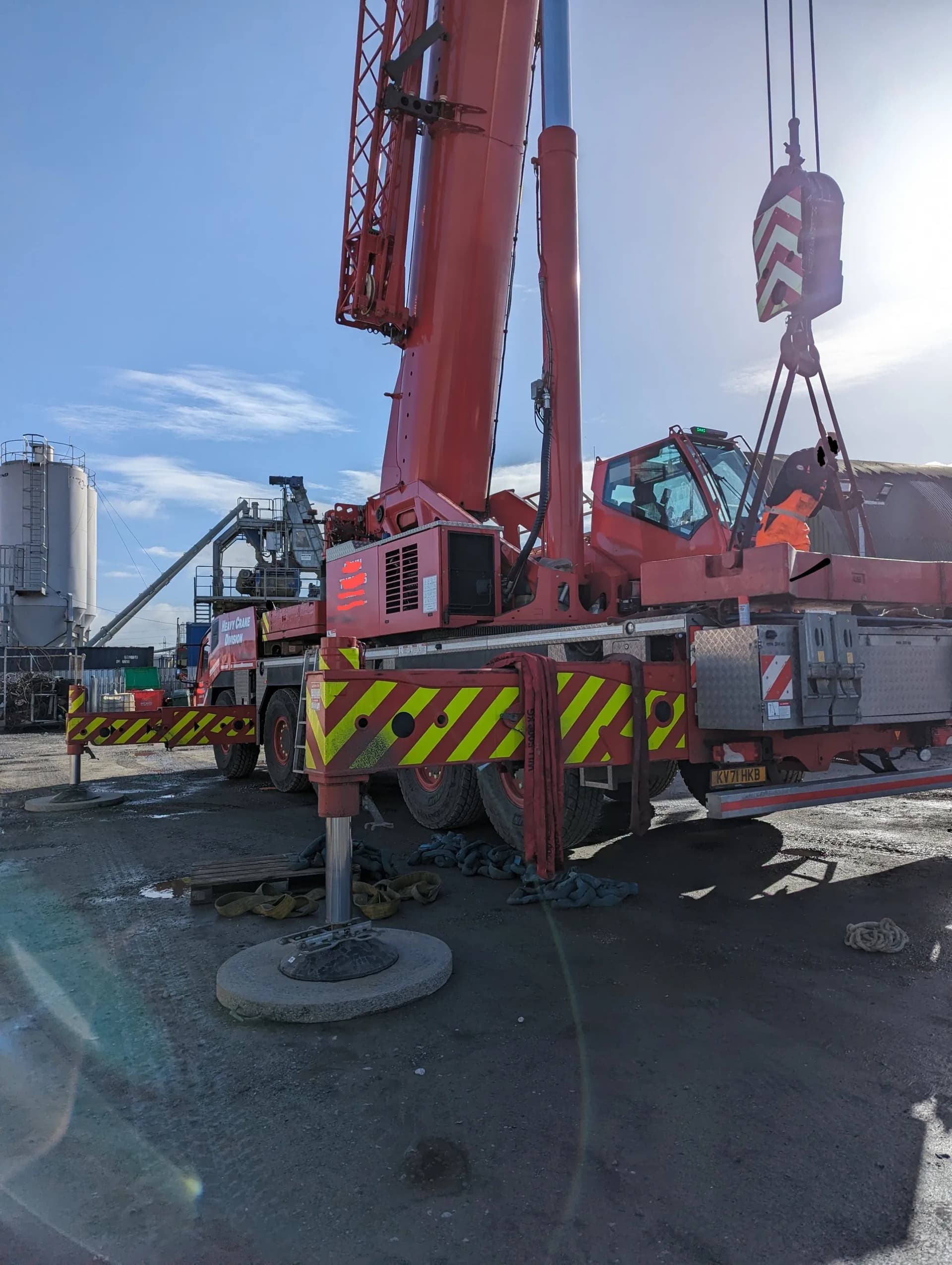
Overhead Crane Inspection
Lifting Operations and Lifting Equipment Regulations 1998
Statutory thorough examination of overhead, gantry, jib, and pendant cranes under LOLER 1998.
What an overhead crane inspection involves
An overhead crane inspection is the LOLER thorough examination that keeps your lifting installation safe and compliant. Safe-Lee examines electric overhead travelling cranes, gantry and semi-gantry cranes, jib cranes and pendant-controlled cranes for businesses across Manchester and the North West. We are independent, so our only interest is an accurate report you can rely on.
We plan the visit around your production, examine the crane through its full range of movement, and issue a clear report of thorough examination, typically within one to two working days. Where your site also runs slings, chains and other accessories, we examine those at the same time.
What we check on an overhead crane
A crane examination covers the structure, the mechanism and the safety systems:
- Main structure, runway beams, end carriages and bracing, for cracks, corrosion and distortion
- Hoist unit: ropes or load chains, drum, sheaves and reeving, for wear and broken wires
- Hook and hook block, for throat opening, wear and free rotation
- Brakes on the hoist, cross-travel and long-travel motions
- Limit switches, end stops and overload protection
- Wheels, flanges and rail alignment
- Pendant, radio or cab controls, and the emergency stop
How often an overhead crane must be examined
LOLER sets the maximum interval between thorough examinations:
- Every 12 months for a crane used to lift goods
- Every 6 months where the crane is used to lift or lower people
- Every 6 months for lifting accessories used with it, such as slings, chains and shackles
- In line with an examination scheme drawn up by a competent person, where one is in place
- Sooner after substantial repair, modification, or an exceptional event such as a shock load
Defects we find most often on an overhead crane
On overhead cranes, the findings we most often record include:
- Broken wires, corrosion or reduced diameter in the hoist rope
- Hook throat opening or wear beyond the allowable limit
- Worn or glazed brake linings and slipping brakes
- Failed or misadjusted limit switches
- Wheel flange wear and runway misalignment
- Damaged pendant controls or a faulty emergency stop
Why our overhead crane examination is independent
Safe-Lee is an independent consultancy, and examinations are carried out by Engineer Surveyor Lee Charnock (EngTech MSOE MBES). Reports are typically issued within one to two working days, and we cover Manchester and the North West. We do not sell or maintain cranes, so there is no pressure to overlook a defect.
For what shapes the price, see our LOLER inspection cost guide, and for the detail on what a competent person checks, our LOLER inspection checklist. More on our LOLER service.
LOLER thorough examination at a glance
The facts that decide what you need and when, in one place.
| Governing regulation | Lifting Operations and Lifting Equipment Regulations 1998, regulation 9 |
|---|---|
| Maximum interval | 6 months for equipment that lifts people and for lifting accessories; 12 months for other lifting equipment; or as set by an examination scheme |
| Also required | After installation or reassembly, and after an exceptional event such as an overload or collision |
| Who must arrange it | The employer or duty holder who controls the equipment |
| Who may carry it out | A competent person, independent enough to report defects without pressure |
| What you receive | A report of thorough examination for each item, with defects classified by urgency and the next due date |
| Typical report turnaround | 1 to 2 working days |
Are Safe-Lee thorough examinations right for you?
We would rather tell you now than after you have booked. Below is who we are a good fit for, who we are not, what this service does not cover, and what else you could do instead, including options we do not sell. Statutory examination is a legal duty rather than a purchase, so the useful question is not whether you need it but whether we are the right people to do it for you.
We are a good fit if
- You are the duty holder or employer responsible for arranging statutory examination
- Your site is in Greater Manchester, Merseyside, Lancashire, Cheshire or the surrounding North West
- You want the examination done by someone with no commercial interest in the equipment staying in service
- You have anything from a single forklift or sling to a multi-crane overhead system
We are not the right choice if
- You need the equipment repaired, serviced or maintained. We examine and report, and we do not carry out remedial work
- You need a single provider to cover many sites across the UK on the same day. We are a small independent practice, not a national network
- You need 24/7 emergency callout. Work is scheduled, including out of hours where that avoids disrupting production
What this service does not cover
- Repair, servicing, maintenance or refurbishment of the equipment examined
- Supply, hire or sale of equipment or spare parts
- Any work that would compromise our independence as the examining body
- Load testing or proof testing, which is separate work commissioned when a report calls for it
What else you could do instead
- Your insurer's engineer surveyor scheme
- Check your own policy before buying inspection twice: some cover arranges statutory inspection for lifting and pressure equipment, and where yours does, it is a genuine alternative and for some businesses the right one.
- A national inspection body
- If you have many sites across the UK, or need round-the-clock cover, a large provider will suit you better than we will.
- An in-house competent person
- If you employ someone with the right knowledge and experience who is genuinely independent of the equipment's operation and maintenance, they can carry out the examination themselves.
What we need from you
Having these ready shortens the visit and keeps the quote accurate.
- A list of the equipment to be examined, with identification or serial numbers where they exist
- Previous reports or certificates, if you have them, so we can see the history and the next due dates
- Safe access to each item, including any isolation, permits or escorts your site requires
- Someone available who can operate the equipment if a functional check is needed
- Any examination scheme drawn up for the equipment, if intervals differ from the statutory default
What a thorough examination costs, and what moves the figure
We do not publish a flat rate, because thorough examination work is scoped to your equipment and site and any single figure would be wrong for most readers. Here is what we price on, what a complete quote covers, and how to judge one quote against another, so you can budget before you speak to anyone.
What moves the price
- Number of items. Each piece of lifting equipment and each accessory is examined in turn, so ten slings take longer than one
- Type and complexity. A webbing sling is a quick visual and functional check; an overhead travelling crane or a passenger lift involves structure, ropes or chains, brakes, limit switches and controls
- Inspection interval. Equipment that lifts people, and lifting accessories, are examined every 6 months rather than 12, so they come round twice as often
- Site access and conditions. Equipment at height, in a confined space, or needing isolation adds time, as does out-of-hours work to avoid disrupting production
- Location and travel. A site near our Irlam base involves less travel than one at the edge of the region
- Scope and bundling. Examining LOLER, PSSR, PUWER and LEV equipment on one planned visit is more efficient than separate trips
What a complete quote should cover
- The competent person's time on site, examining to the standard the regulations require
- A written report identifying any defects and classifying them by how urgently they must be addressed
- The date the next examination falls due
- Certification you can show an HSE inspector or your insurer
- Travel to your site
If a quote does not spell these out, ask. The report is the part that proves compliance; an examination with no usable report leaves you no better off than before.
How to compare quotes fairly
Ask every firm the same questions, including us. A cheaper quote usually differs on one of these rather than on the work itself.
| Compare on | Safe-Lee |
|---|---|
| Who carries out the examination, and what qualifications and competent-person status they hold | Stated in writing |
| Whether they hold professional indemnity and public liability insurance | Stated in writing |
| Whether they are independent of the equipment's supply, hire and maintenance | Stated in writing |
| Exactly what is included, in writing, with a sample report | Stated in writing |
| How quickly the report is issued after the visit | Stated in writing |
Frequently Asked Questions
How often does an overhead crane need a LOLER examination?
Every 12 months for a crane that lifts goods, and every 6 months where it is used to lift people. Slings and other accessories are examined every 6 months. These are LOLER maximum intervals.
Do you examine gantry and jib cranes too?
Yes. We examine electric overhead travelling cranes, gantry and semi-gantry cranes, jib cranes and pendant-controlled cranes, along with the accessories used with them.
Will the crane be out of use during the examination?
The crane is operated through its movements as part of the examination, so it is out of normal production for the visit. We plan timing around your operation, including out of hours where needed.
Do you provide the report of thorough examination?
Yes. Every examination produces a written report of thorough examination, typically issued within one to two working days, which you keep as your compliance record.
What happens if a serious defect is found?
A defect that is an existing or imminent danger means the crane should be taken out of use until it is put right. We explain the finding on site and record it, with timescales, in the report.
Where the LOLER thorough examination rules come from
Everything on this page is our reading of the following documents. They are the authority, not us, so we link them directly and you can check any of it yourself.
- The Lifting Operations and Lifting Equipment Regulations 1998
legislation.gov.uk
The statutory instrument itself. Regulation 9 is the thorough examination duty.
- Safe use of lifting equipment (L113)
Health and Safety Executive
The Approved Code of Practice for LOLER. An ACOP has special legal status: follow it and you are doing enough to comply.
- Thorough examination of lifting equipment (INDG422)(PDF)
Health and Safety Executive
HSE's plain-English guide for employers on what a thorough examination is and when it is due.
Need an overhead crane inspection?
Quick conversation, honest scoping, fast quote. Talk to a competent person.