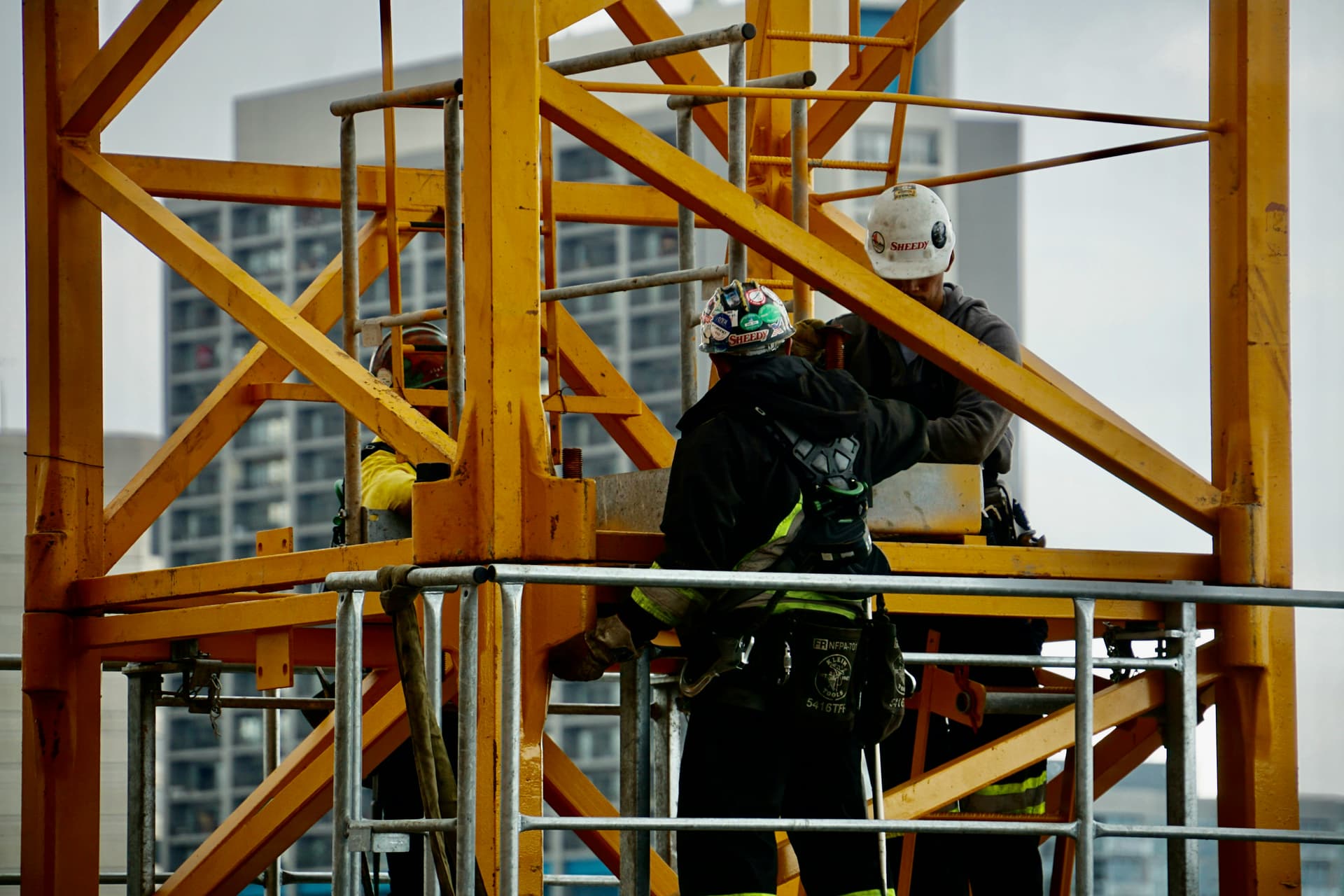
What does WAHR stand for? WAHR stands for the Work at Height Regulations 2005. These regulations apply to work where a person could fall a distance liable to cause personal injury. They require work at height to be properly planned, appropriately supervised and carried out by competent people using suitable equipment.
The regulations do not ban work at height, and they do not prescribe one solution for every task. Instead, they establish a hierarchy that dutyholders must follow:
-
Avoid work at height where reasonably practicable.
-
Prevent falls where the work cannot be avoided.
-
Minimise the distance and consequences of a fall where the risk cannot be eliminated.
Equipment used for work at height must also be suitable, properly maintained and inspected at appropriate intervals.
What does WAHR stand for in health and safety?
WAHR is a commonly used abbreviation for the Work at Height Regulations 2005.
The regulations came into force to consolidate and strengthen the legal framework for controlling falls from height. They apply across industries rather than being limited to construction.
WAHR can therefore be relevant to activities in:
-
construction and civil engineering
-
manufacturing and engineering
-
warehousing and logistics
-
facilities management
-
property maintenance
-
utilities and telecommunications
-
retail
-
agriculture
-
cleaning
-
transport
-
entertainment and events
The regulations applying in Great Britain are the Work at Height Regulations 2005. Northern Ireland has separate but closely related Work at Height Regulations (Northern Ireland) 2005.
The phrase “work at height” is more important than the industry in which the work takes place. A maintenance task above machinery in a factory can present a work-at-height risk just as readily as roofing or scaffolding work.
What counts as work at height?
Work at height means work in any place where, without suitable precautions, a person could fall a distance liable to cause personal injury.
It can include work:
-
above ground or floor level
-
near an open edge
-
on a roof
-
from a ladder or stepladder
-
from a scaffold or tower
-
from a mobile elevating work platform
-
on top of plant, machinery, vehicles or storage systems
-
near an opening, excavation or fragile surface
-
below ground level where someone could fall into a lower area
-
while gaining access to or leaving a place of work at height
There is no general minimum height at which the regulations suddenly begin to apply. A fall does not have to be from two metres or more to cause personal injury.
The familiar two-metre measurement appears in some specific inspection and protection requirements, but it is not the definition of work at height. A shorter fall onto machinery, sharp materials, moving equipment or an uneven surface could still cause serious harm.
Ordinary slips or trips on the same level are not normally treated as falls from height. However, a person falling from one level to another, including through a fragile surface or opening, can fall within the regulations.
The HSE’s introduction to working at height provides examples of the circumstances covered.
Who has responsibilities under WAHR?
Duties can apply to:
-
employers
-
self-employed people
-
contractors
-
facilities managers
-
building owners who control work
-
people responsible for organising or supervising others
-
organisations that provide work equipment
The precise responsibility depends on who controls the work, workplace, equipment or people involved.
Hiring a contractor does not necessarily remove every duty from the client. A business engaging a contractor should still take reasonable steps to confirm that the work will be properly planned, that appropriate equipment will be used and that those carrying out the work are competent.
Employees must also use equipment and safety measures correctly, follow training and instructions, and report hazards or defects that could affect safety.
What do the Work at Height Regulations require?
WAHR requires dutyholders to manage the complete activity, not simply provide a harness or inspect a ladder.
The principal requirements include ensuring that:
-
work at height is properly planned
-
emergencies and rescue are considered
-
the work is appropriately supervised
-
those involved are competent
-
risks are assessed
-
suitable work equipment is selected
-
fragile surfaces are properly controlled
-
falling objects are prevented or controlled
-
working areas are appropriately protected
-
equipment is inspected and maintained
-
unsafe work is stopped
The precautions should be proportionate to the actual risk. A brief, low-risk task may need relatively straightforward controls. Complex roof work, rope access or work above operating machinery may require detailed planning, specialised equipment and a formal rescue arrangement.
“Short duration” does not automatically make a task safe. Duration is one factor in deciding which equipment is suitable, but the potential fall, working position, surface, environment and consequences must also be considered.
The WAHR hierarchy of control
The work-at-height hierarchy must be considered in sequence. Dutyholders should not begin by choosing a harness and then work backwards to justify it.
Avoid work at height
The first question is whether the task can be completed from a safe level.
Examples include:
-
using extendable tools from ground level
-
bringing components down for inspection or maintenance
-
lowering lighting columns or equipment
-
relocating controls or sampling points
-
assembling items at ground level before installation
-
using remote inspection technology where appropriate
Avoiding exposure is normally more reliable than trying to control a fall once someone is at height.
Prevent a fall
If work at height cannot reasonably be avoided, the next priority is preventing a person from falling.
Collective protection should generally be considered before personal protection because it protects everyone without relying on each individual to connect or adjust equipment correctly.
Collective fall-prevention measures can include:
-
permanent edge protection
-
properly guarded working platforms
-
scaffolding
-
tower scaffolds
-
mobile elevating work platforms
-
temporary guardrails
-
suitable covers over openings
Personal fall prevention can include a properly designed work-restraint system that physically prevents the user from reaching a position from which they could fall.
Minimise the distance and consequences of a fall
Where a residual fall risk remains, measures should minimise the potential distance and consequences.
Examples include:
-
safety nets
-
soft-landing systems
-
appropriately designed fall-arrest systems
-
industrial rope-access systems
Fall arrest does not prevent the fall from beginning. It aims to arrest it safely after it has occurred. This introduces additional considerations, including clearance distance, anchor strength, equipment compatibility, suspension trauma and rescue.
The HSE’s work-at-height step-by-step guide illustrates this hierarchy.
Does WAHR require equipment inspections?
Yes. Equipment whose safety depends on its condition must be inspected at suitable times and intervals.
The purpose is to identify deterioration or defects before they expose someone to danger. The type, scope and frequency of inspection depend on the equipment, its use, environment, manufacturer’s instructions and applicable legal requirements.
Safe-Lee provides WAHR inspections for businesses that need a competent assessment and clear record of work-at-height equipment.
An inspection is not a substitute for:
-
selecting the correct equipment
-
completing pre-use checks
-
preventive maintenance
-
proper planning
-
operator training
-
supervision
-
a safe system of work
A current inspection record does not make unsuitable equipment appropriate for a particular task.
How often should work-at-height equipment be inspected?
There is no single inspection interval covering every item of work-at-height equipment.
The appropriate frequency depends on what the equipment is, how it is used and whether a specific legal provision applies.
Before use
Users should complete suitable pre-use checks so that obvious defects are identified before exposure begins.
For example, the HSE advises that ladders and stepladders should receive a pre-use check at the beginning of each working day in which they will be used. The check should also be repeated if something happens that could affect the ladder’s condition.
A pre-use check does not usually require dismantling or specialist testing. Its purpose is to find readily visible defects and confirm that the equipment appears suitable for immediate use.
At suitable intervals
Equipment exposed to conditions that can cause deterioration should receive recorded inspections at intervals determined by risk assessment, the manufacturer’s instructions and competent advice.
Factors influencing the frequency include:
-
how often the equipment is used
-
the severity of use
-
exposure to weather or chemicals
-
risk of corrosion
-
transportation and storage conditions
-
the consequences of failure
-
previous damage or defects
-
the equipment’s age
-
the manufacturer’s recommendations
Frequently used equipment in a harsh environment may need closer monitoring than equipment that is used occasionally and stored correctly.
After exceptional circumstances
An additional inspection may be needed after an event that could affect safety, such as:
-
impact or accidental loading
-
a fall arrested by the equipment
-
severe weather
-
unauthorised alteration
-
incorrect assembly
-
relocation
-
prolonged storage
-
structural repair
-
chemical contamination
-
reported malfunction
Personal fall-protection equipment that has arrested a fall should be withdrawn from use and managed in accordance with the manufacturer’s instructions. It should not simply be returned to storage because no damage is immediately visible.
Scaffolding inspections
Where construction work is being carried out and a person could fall two metres or more from a working platform, the scaffold will normally require inspection:
-
before it is used for the first time
-
at intervals not exceeding seven days
-
after circumstances liable to affect its safety, such as substantial alteration or severe weather
The inspection must be carried out by a competent person, and the required report must be produced.
The HSE explains the requirements in its scaffolding guidance.
The seven-day interval should not be incorrectly applied to every ladder, harness or item of access equipment. It relates to particular working platforms and construction circumstances.
Ladders and stepladders
Ladders should have:
-
pre-use checks on each working day they are used
-
recorded detailed visual inspections at suitable intervals
-
additional checks following an event that could cause damage
The detailed inspection frequency should reflect the manufacturer’s instructions and the employer’s risk assessment.
The HSE’s ladder inspection guidance identifies common areas to examine, including feet, stiles, rungs, locking mechanisms, stays and welded joints.
Harnesses, lanyards and fall-protection equipment
Personal fall-protection equipment should be checked by the user before use and undergo recorded detailed examinations at intervals determined by the applicable instructions and inspection regime.
Relevant items can include:
-
full-body harnesses
-
energy-absorbing lanyards
-
work-restraint lanyards
-
connectors
-
inertia-reel devices
-
ropes
-
anchor devices
-
guided fall arresters
-
rescue equipment
The inspection should consider the complete system. Components that appear serviceable individually may be incompatible when connected together.
A generic interval should not be applied without checking the manufacturer’s requirements, equipment type, frequency of use and operating conditions.
What should a WAHR inspection examine?
The scope depends on the equipment. A competent inspection should be sufficiently detailed to identify defects that could affect continued safe use.
Relevant matters may include:
-
correct equipment identification
-
conformity and manufacturer’s markings
-
rated capacity or user limitations
-
structural damage
-
corrosion
-
cracking
-
distortion
-
wear
-
missing or incompatible parts
-
unauthorised modifications
-
condition of welds and connections
-
locking and adjustment mechanisms
-
stability devices
-
guardrails and edge protection
-
access gates
-
platform condition
-
anchor points
-
webbing, stitching and connectors
-
labels and inspection information
-
evidence of contamination
-
correct assembly
-
previous repairs
-
storage condition
The inspection should be appropriate to the foreseeable failure modes. A checklist can help provide consistency, but it should not prevent the inspector from investigating an unusual defect.
Where necessary, the equipment should be quarantined until further assessment, repair or replacement has taken place.
What makes someone competent to inspect the equipment?
Competence is not established by job title alone.
The inspector should have enough training, knowledge and practical experience to:
-
understand the equipment and its intended use
-
recognise relevant defects
-
distinguish acceptable wear from dangerous deterioration
-
understand the applicable inspection criteria
-
assess the significance of findings
-
determine whether the equipment can remain in service
-
produce an adequate inspection record
The competence required depends on the complexity of the equipment. An employee may be competent to complete a detailed ladder inspection after suitable training, while a complex fall-arrest system, powered access platform or specialist anchor installation may require more advanced expertise.
The inspector must also be able to make an objective decision. Production pressure or inconvenience should not influence whether defective equipment is removed from service.
Does a harness make work at height compliant?
No. Supplying a harness does not by itself satisfy WAHR.
Before selecting personal fall protection, the dutyholder should establish whether the work can be avoided or whether collective measures can prevent a fall.
A fall-arrest system can fail to provide effective protection if:
-
there is no suitable anchor point
-
components are incompatible
-
there is insufficient clearance below the user
-
the lanyard is too long
-
the user could strike an obstruction
-
the harness is incorrectly fitted
-
the user is not trained
-
there is no rescue plan
-
the equipment is damaged or overdue for inspection
Someone left suspended after a fall can be at risk even if the fall-arrest equipment worked correctly. Rescue arrangements should therefore form part of the planning rather than being improvised after an incident.
Can ladders still be used under WAHR?
Yes. The Work at Height Regulations do not ban ladders.
A ladder may be appropriate where the risk assessment shows that equipment offering a higher level of fall protection is not justified because:
-
the task is low risk and of short duration, or
-
existing workplace features cannot reasonably be altered
Short duration is not enough on its own. The ladder must also be suitable, stable, correctly positioned and capable of being used safely.
The HSE suggests considering different equipment where a task would require someone to remain on a leaning ladder or stepladder for more than approximately 30 minutes at a time. This is guidance rather than an automatic legal cut-off.
Using a ladder may be inappropriate where the work:
-
requires heavy or strenuous activity
-
involves significant side loading
-
requires the user to overreach
-
needs both hands for prolonged periods
-
is carried out in poor weather
-
is close to moving vehicles or machinery
-
is above an unprotected hazard
-
requires moving bulky materials
The equipment should be selected for the task, not simply because it is already available.
WAHR, LOLER and PUWER
A single piece of equipment can fall within more than one set of regulations.
WAHR
WAHR addresses the risk of a person falling while working at height. It covers planning, competence, equipment selection, fall prevention and inspection.
PUWER
The Provision and Use of Work Equipment Regulations apply more broadly to equipment used at work. PUWER addresses suitability, maintenance, inspection, controls, guarding, information and training.
Safe-Lee’s PUWER inspections can help identify wider work-equipment issues that sit outside the specific work-at-height requirements.
LOLER
The Lifting Operations and Lifting Equipment Regulations may apply where equipment performs a lifting function. Examples can include mobile elevating work platforms and other machinery used to lift people.
LOLER thorough examination is a specific statutory process and should not be confused with every inspection carried out under WAHR.
A mobile elevating work platform, for example, may be relevant to:
-
WAHR because it is used to provide a place of work at height
-
PUWER because it is work equipment
-
LOLER because it lifts people
Compliance should therefore be considered as a connected system rather than as three unrelated certificates.
What records should be kept?
Where an inspection is required, the record should clearly identify:
-
the equipment inspected
-
the inspection date
-
who completed it
-
the scope or type of inspection
-
defects found
-
action required
-
whether the equipment is safe to remain in service
-
any restrictions
-
the next inspection date where applicable
Records should be clear enough for another person to understand what was inspected and what happened as a result.
Safe-Lee’s report-writing service supports businesses requiring practical and traceable inspection documentation.
An inspection register is useful, but it should not become a substitute for acting on defects. There should be a process for:
-
identifying the defect
-
removing or restricting the equipment
-
assigning corrective action
-
confirming repair or replacement
-
authorising return to service
-
retaining evidence of the decision
Common misunderstandings about WAHR
“Work at height starts at two metres”
Incorrect. The regulations apply where a fall could cause personal injury. A fall of less than two metres can still be dangerous.
“Harnesses must always be used”
Incorrect. The hierarchy prioritises avoiding work at height and preventing falls. Collective protection should normally be considered before personal protection.
“Ladders are banned”
Incorrect. Ladders remain acceptable for suitable low-risk, short-duration work where the risk assessment supports their use.
“An annual inspection is enough for everything”
Incorrect. Inspection intervals depend on the equipment, circumstances and applicable requirements. Some equipment requires daily pre-use checks, recorded periodic inspections or inspection after exceptional events. Certain scaffolds must be inspected at least every seven days.
“A safety tag is the inspection record”
Not necessarily. A tag can communicate status, but it does not replace a legally required inspection report.
“The contractor is responsible, so the client has no duties”
Not always. Responsibility depends on who controls the work and workplace. Clients and facilities managers may retain relevant duties.
“Passing an inspection proves the task is safe”
Incorrect. Inspection addresses equipment condition. The work must still be planned, risk assessed, supervised and carried out using suitable methods.
A practical WAHR compliance checklist
Before work begins, confirm that:
-
The work cannot reasonably be completed from ground level.
-
The risks have been assessed.
-
The hierarchy has been followed.
-
Collective protection has been prioritised where appropriate.
-
The selected equipment is suitable for the task and environment.
-
Workers and supervisors are competent.
-
The equipment has received the necessary inspections.
-
Pre-use checks have been completed.
-
Fragile surfaces and openings have been identified.
-
Access and egress are safe.
-
Falling objects are controlled.
-
Weather and site conditions are acceptable.
-
Exclusion zones are established where necessary.
-
Emergency and rescue arrangements are realistic.
-
Defects can be reported and acted upon promptly.
The plan should be reviewed when the task, equipment, environment or personnel change.
Arranging an inspection of work-at-height equipment
WAHR stands for the Work at Height Regulations 2005. The regulations require more than periodic equipment checks, but suitable inspection is an important part of demonstrating that equipment remains safe.
There is no universal inspection period for every item. The correct schedule should reflect the equipment, manufacturer’s instructions, legal requirements, conditions of use and competent assessment.
Safe-Lee Inspection & Consultancy provides inspections of work-at-height equipment for businesses in Manchester, across the North West and for multi-site clients throughout the UK. To discuss equipment, inspection intervals or existing records, contact Safe-Lee.