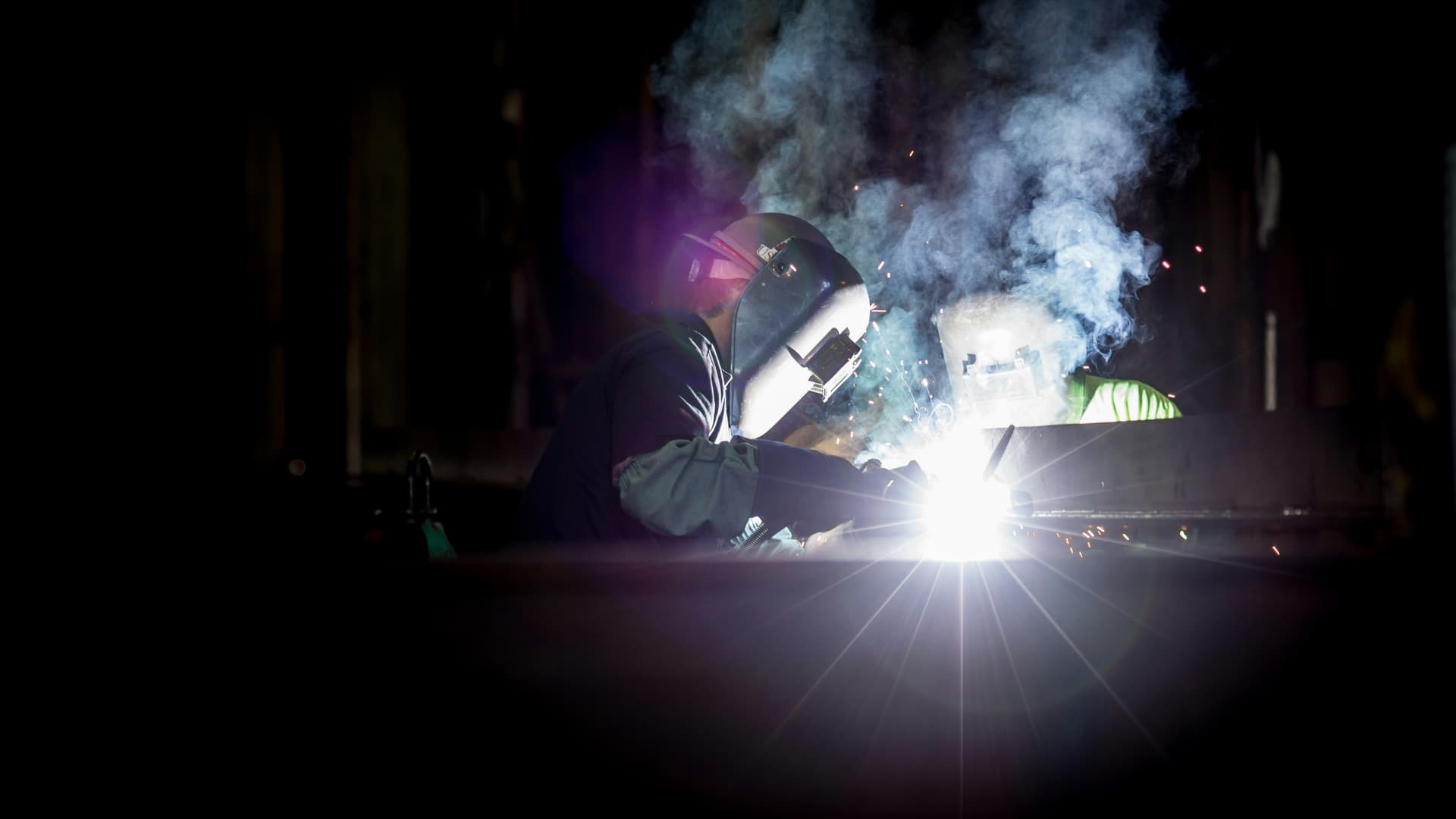
How often should LEV be inspected and tested? For most local exhaust ventilation systems used to control exposure to hazardous substances, the maximum interval between statutory thorough examinations and tests is 14 months. Certain processes listed in Schedule 4 of COSHH require testing every six months or every month, and a risk assessment may indicate that other systems need more frequent attention.
The 14-month examination is only part of the obligation. Employers must also maintain the system and arrange suitable routine checks between statutory tests. An LEV system can deteriorate, become blocked or be used incorrectly long before its next thorough examination is due.
How often should LEV be inspected and tested?
The correct frequency depends on which activity is being discussed:
ActivityTypical or statutory frequencyOperator pre-use checksBefore use or at a frequency suitable for the systemRoutine performance and condition checksDetermined by risk, manufacturer’s instructions and experienceMaintenanceAt the intervals necessary to keep the system effectiveThorough examination and testAt least every 14 months for most LEV systemsSchedule 4 processesEvery month or six months, depending on the processAdditional assessmentFollowing changes, damage, poor performance or other relevant events
The distinction matters. A business cannot rely solely on a statutory test every 14 months if an obvious defect develops between visits. Equally, daily visual checks do not replace the thorough examination and test required under the Control of Substances Hazardous to Health Regulations 2002, commonly known as COSHH.
What is local exhaust ventilation?
Local exhaust ventilation, or LEV, is an engineering control designed to capture airborne contaminants at or close to their source before they enter a worker’s breathing zone or spread through the workplace.
It may be used to control:
-
Dust
-
Fume
-
Smoke
-
Mist
-
Vapour
-
Gas
-
Aerosols
-
Other airborne substances hazardous to health
An LEV system commonly includes:
-
A hood, booth or enclosure that receives the contaminant
-
Ductwork that carries contaminated air
-
An air cleaner, filter or collection device where required
-
A fan or other air mover
-
A discharge point
-
Controls and performance indicators
Examples range from fixed welding-fume extraction systems and woodworking dust extraction to paint-spray booths, laboratory enclosures and portable on-tool extraction units.
LEV should form part of an effective exposure-control strategy. It does not automatically make a process safe simply because extraction equipment has been installed. The hood must suit the process, be positioned correctly and provide sufficient control while the work is actually taking place.
Why is the usual maximum interval 14 months?
Regulation 9 of COSHH requires engineering controls to be maintained in an efficient state, in efficient working order, in good repair and in a clean condition.
Where the control measure is local exhaust ventilation, it must normally receive a thorough examination and test at least once every 14 months. The statutory wording creates a maximum interval, not a suggestion that every system should wait exactly 14 months.
Many businesses arrange testing annually because a 12-month schedule is straightforward to manage and provides some protection against inadvertently exceeding the legal maximum. An annual arrangement is acceptable where it is sufficiently frequent for the risk, but the law does not state that every LEV system must be tested on the same date each year.
More frequent testing may be necessary where:
-
The system deteriorates quickly
-
Filters or ductwork are prone to blockage
-
The contaminant presents a particularly serious health risk
-
The system operates for long hours or across several shifts
-
Previous reports show declining performance
-
The process creates heavy or abrasive deposits
-
The environment causes corrosion or physical damage
-
Failure could expose several people
-
The manufacturer specifies a shorter interval
-
The system serves a process listed in Schedule 4 of COSHH
The examination frequency should therefore reflect both the legal maximum and the actual circumstances.
Which LEV systems require more frequent testing?
Schedule 4 of COSHH specifies shorter maximum intervals for a small number of processes.
Thorough examination and test every month
A maximum interval of one month applies to LEV used for:
-
Blasting carried out in, or incidental to, cleaning metal castings in connection with their manufacture
-
Jute cloth manufacture
Thorough examination and test every six months
A maximum interval of six months applies to LEV used for:
-
Processes, other than wet processes, in which metal articles other than gold, platinum or iridium are ground, abraded or polished using mechanical power in any room for more than 12 hours in any week
-
Processes giving off dust or fume in which non-ferrous metal castings are produced
The exact wording and operating circumstances are important. It would be inaccurate to claim that all welding, woodworking, grinding or spray-booth extraction automatically falls into the six-month statutory category.
For example, Schedule 4 does not apply a six-month interval to every instance of powered metal grinding. The provision refers to non-wet processes conducted for more than 12 hours in any week in a room and excludes certain named metals.
Even where a process does not fall within Schedule 4, a shorter interval may still be appropriate because of risk, use or deterioration. If there is uncertainty, the activity and system should be reviewed by someone competent rather than defaulting to 14 months.
The statutory requirements can be checked in regulation 9 and Schedule 4 of COSHH.
What is a thorough examination and test?
An LEV thorough examination and test is a structured assessment of whether the system continues to provide the intended control of airborne contaminants.
It is sometimes abbreviated to TExT. It is more extensive than a service visit, a filter change or a visual check that the fan is running.
A suitable examination normally combines three elements.
A physical examination
The examiner assesses the condition of the system and its components. This may include:
-
Hoods and enclosures
-
Ductwork and flexible connections
-
Dampers
-
Filters and air cleaners
-
Fans
-
Discharge arrangements
-
Performance indicators
-
Controls
-
Supporting structures
-
Other components affecting control performance
The examiner looks for damage, wear, corrosion, leakage, blockage, unsuitable alterations and other defects that could reduce effectiveness.
Measurements and functional tests
The examiner takes relevant measurements to establish how the system is performing. Depending on the design, these may include:
-
Volume flow rates
-
Face or capture velocities
-
Duct velocities
-
Static pressures
-
Fan speed
-
Filter pressure differences
-
Electrical measurements
-
Other appropriate performance indicators
Measurements should be compared with suitable reference information. A numerical reading has limited value when no one knows what the system was intended to achieve.
Assessment of control effectiveness
The central question is whether the LEV is adequately controlling exposure during the real work process.
This may involve observing:
-
How the contaminant is generated
-
Whether the hood is suitable
-
The distance and orientation between the source and hood
-
The effect of cross-draughts
-
Operator positioning and working methods
-
Whether the contaminant escapes into the breathing zone
-
Whether the system remains effective across different tasks
-
Whether employees use it correctly
Smoke visualisation, a dust lamp or other suitable techniques may be used where appropriate. The assessment should not rely on airflow readings alone when those readings do not demonstrate effective capture.
HSE describes an LEV thorough examination and test as checking whether the system is still working as effectively as originally intended and helping to protect employees’ health. Further detail is available in the HSE LEV frequently asked questions.
Why commissioning information matters
A thorough examination is strongest when the examiner has information describing the system’s intended performance.
A suitable commissioning report establishes a baseline after installation. It should show that the LEV provides adequate control and record the conditions and performance measurements against which later tests can be compared.
Useful information can include:
-
A description of the process and contaminant
-
System drawings or a schematic
-
Hood types and positions
-
Relevant airflow requirements
-
Commissioning measurements
-
Test points
-
Fan and filter information
-
Operating configurations
-
Requirements for correct use
-
Maintenance instructions
-
Indicators showing acceptable performance
Without design or commissioning data, an examiner may be able to assess condition and take measurements, but determining whether the system still achieves its intended performance can be more difficult.
If the original information is unavailable, a competent person may need to establish suitable performance criteria using the system, process, recognised guidance and exposure-control requirements. That is more meaningful than comparing current readings with figures copied from an unrelated system.
HSE explains why commissioning provides the benchmark for subsequent examinations in its guidance on commissioning an LEV system.
What routine LEV inspections are needed between tests?
COSHH requires control measures to remain effective, not merely to perform acceptably on the day of the statutory examination.
Operators and responsible staff should therefore complete suitable routine checks. The nature and frequency will depend on the system, contaminant, workload and likely deterioration.
Checks may include:
-
Confirming that the fan operates
-
Looking for damage to hoods, hoses and ductwork
-
Checking for loose or disconnected components
-
Looking for blockages or excessive deposits
-
Checking filter or pressure indicators
-
Confirming that alarms and indicators work
-
Ensuring extraction hoods are correctly positioned
-
Checking that flexible connections remain secure
-
Looking for evidence of leakage
-
Confirming that collection bags or bins are correctly fitted
-
Checking that replacement parts are compatible
-
Observing whether contaminant capture appears effective
-
Reporting unusual noise, vibration or loss of suction
A simple tell-tale made from paper or plastic is not an adequate performance indicator for most systems. HSE warns that such devices can be delicate and ineffective, particularly for anything other than a very simple system controlling a low-hazard substance.
Suitable airflow indicators can help users recognise a loss of performance, but the indicator must provide meaningful information and be understood by the people operating the system.
The frequency of routine checks should be recorded in the system’s user manual or logbook. Initially, more frequent checks may be appropriate until the organisation understands how quickly the system deteriorates.
What is the difference between checking, maintenance and testing?
These activities support one another but are not interchangeable.
Routine checking
Routine checks identify obvious changes, damage or loss of performance during normal use. They may be completed by trained operators or other responsible people.
Maintenance
Maintenance keeps the LEV in efficient working order. It may involve:
-
Cleaning
-
Removing blockages
-
Replacing filters
-
Repairing damaged ductwork
-
Adjusting belts
-
Lubricating components
-
Repairing controls or indicators
-
Replacing worn components
Maintenance frequency should follow the manufacturer’s information and respond to experience of how the system performs.
Thorough examination and test
The statutory examination and test is a detailed assessment by a competent person. It examines the system, measures performance and judges whether it still provides the intended control.
A maintenance contractor may also be competent to perform the examination, but servicing the system does not automatically satisfy the COSHH testing requirement. The scope, competence, measurements and report must be suitable.
Likewise, passing a thorough examination does not remove the need for routine maintenance and checks during the following 14 months.
Who can inspect and test an LEV system?
The thorough examination and test must be completed by someone competent for the system and process involved.
Competence comes from an appropriate combination of:
-
Knowledge
-
Training
-
Practical skills
-
Relevant experience
-
Understanding of occupational hygiene and exposure control
-
Understanding of ventilation principles
-
Ability to use and interpret suitable test instruments
-
Knowledge of the contaminant and process
-
Ability to identify defects and recommend proportionate action
Completing a training course does not, by itself, make someone competent. Qualifications can provide useful evidence of knowledge, but the examiner also needs appropriate practical ability and experience.
The necessary competence may differ significantly between a simple portable extraction unit and a complex multi-branch system serving several processes.
Before appointing an examiner, the employer should ask:
-
What types of LEV systems have you examined?
-
Are you familiar with this process and contaminant?
-
What qualifications, training and experience do you have?
-
What measurements will you take?
-
How will you assess capture and control effectiveness?
-
What information do you need before attending?
-
What will the report contain?
-
How will defects and priorities be communicated?
-
Are your instruments appropriately calibrated?
The employer remains responsible for ensuring that the control measure is effective, even when the examination is outsourced.
Safe-Lee provides independent COSHH LEV inspections to help dutyholders assess system condition and performance.
What should an LEV test report contain?
The report should provide meaningful evidence of what was examined, how the system performed and what action is required.
A useful report will generally include:
-
The employer’s details
-
The location of the system
-
Clear identification of the LEV and its hoods
-
The examination date
-
The examiner’s details
-
The intended process and contaminant
-
The system’s intended performance
-
The condition of relevant components
-
Methods and instruments used
-
Calibration information
-
Test points
-
Measurements and reference values
-
Assessment of control effectiveness
-
Details of defects
-
Prioritised remedial action
-
The conclusion for each hood or system
-
The next examination due date
Labels can help operators and supervisors identify whether a system has been tested and when the next test is due. HSE also recommends identifying failed hoods or systems clearly. However, a label is not a substitute for the full report.
The report should be understandable to the dutyholder. If it only presents technical measurements without explaining whether the system controls exposure or what must be corrected, it has limited practical value.
How long must LEV test records be kept?
The employer must retain a record of the thorough examination and test for at least five years.
The record should be secure and retrievable. It may be stored electronically, provided it can be produced when needed and is protected against loss or unauthorised alteration.
Commissioning information, system design data, user manuals and other baseline documentation should normally be retained for the life of the system. These documents help future examiners determine whether performance has changed.
A practical LEV logbook can include:
-
Commissioning information
-
Thorough examination and test reports
-
Routine check records
-
Maintenance and repair records
-
Filter changes
-
Modifications
-
Reports of poor capture or exposure concerns
-
Training and instruction records
-
Details of replacement components
Reviewing records can reveal recurring failures, increasing pressure losses or declining airflow before the issue becomes more serious.
What should happen if the LEV fails its examination?
A failed or defective system should not be treated as compliant merely because a test has taken place.
The dutyholder should assess the significance of each defect and control the resulting exposure. Action may include:
-
Stopping the affected process
-
Preventing use of a failed hood
-
Repairing damaged components
-
Replacing filters
-
Clearing blockages
-
Correcting hood position or design
-
Adjusting or rebalancing the system
-
Changing working methods
-
Providing temporary alternative controls where suitable
-
Re-testing after remedial work
-
Reviewing the COSHH assessment
Critical defects should be addressed immediately. Less urgent issues should still have clear priorities and completion dates.
Continuing to use ineffective LEV while relying on respiratory protective equipment as an informal substitute may not provide adequate control. The appropriate response must follow the hierarchy of control and the specific risk assessment.
A failed test can also reveal a wider problem. If employees have relied on ineffective extraction, the employer may need to review exposure assessment, health surveillance, training and the adequacy of controls across similar processes.
Does portable or on-tool extraction need testing?
Yes, where on-tool extraction is used as LEV to control exposure to hazardous substances, the extraction unit requires a suitable thorough examination and test.
HSE states that the extraction unit should normally be thoroughly examined and tested at least every 14 months, with more frequent testing where wear could reduce effectiveness sooner.
The wider control system also requires routine checking and maintenance. This can include the:
-
Capturing hood or shroud
-
Hose
-
Connections
-
Extraction unit
-
Filters
-
Collection bags
-
Airflow indicator
-
Cleaning mechanism
Portable equipment is easily moved, damaged or assembled incorrectly. Users should check that components are compatible and that the extraction remains suitable for the tool and task.
Where extraction equipment is hired, the dutyholder should confirm its examination status and understand who is responsible for routine checks, maintenance and re-testing. A hire label should not be accepted blindly if the system is damaged or performing poorly.
Is LEV testing the same as a COSHH assessment?
No. An LEV examination and test assesses the condition and performance of a specific exposure-control system.
A COSHH assessment considers the broader risk from hazardous substances and determines how exposure will be prevented or adequately controlled.
The COSHH assessment should consider:
-
Which hazardous substances are present
-
How exposure can occur
-
Who may be exposed
-
The level, frequency and duration of exposure
-
Whether substitution or process changes are possible
-
Whether enclosure or LEV is required
-
How controls will be used and maintained
-
Whether respiratory protection is also necessary
-
Information, instruction and training
-
Monitoring and health surveillance where appropriate
-
Emergency arrangements
An LEV system can pass its mechanical and airflow checks yet still be unsuitable for the process. For example, a hood may operate according to its original specification but fail to capture a contaminant because the task or material has changed.
Conversely, poor examination results may show that the COSHH assessment’s assumed control measures are no longer reliable. The two processes must inform each other.
Common LEV inspection and testing mistakes
Treating 14 months as a recommended waiting period
Fourteen months is the maximum interval for most systems. Earlier testing may be necessary, and many businesses use an annual programme to avoid exceeding the limit.
Assuming every process has the same interval
Certain Schedule 4 processes require monthly or six-monthly examinations.
Confusing a service with a thorough examination
Changing filters or checking that a fan operates does not necessarily demonstrate effective contaminant control.
Relying only on airflow measurements
The examiner must consider whether the contaminant is captured effectively during actual use.
Having no commissioning information
Without an intended performance benchmark, meaningful comparison becomes more difficult.
Ignoring portable extraction
On-tool and portable extraction used to control hazardous substances can still be LEV and require examination.
Failing to act on defects
A report does not control exposure. Remedial actions must be completed and their effectiveness confirmed.
Neglecting checks between examinations
LEV can become damaged or blocked before the next statutory test. Operators need a clear reporting and checking system.
Using an unsuitable examiner
A qualification alone does not demonstrate competence for every process or system.
Keeping only a test label
The full examination report must be retained for at least five years. A label is a useful status indicator, not the complete statutory record.
Frequently asked questions
Is LEV testing a legal requirement?
Yes. Where LEV is provided as an engineering control under COSHH, it must be maintained and thoroughly examined and tested at the required intervals.
Is LEV testing required every 12 or 14 months?
For most systems, the statutory maximum is 14 months. Some businesses test annually for easier scheduling. Certain processes require monthly or six-monthly testing.
Does welding-fume extraction need testing?
Yes, LEV used to control welding fume requires thorough examination and testing. For most welding extraction, the general maximum of 14 months applies unless risk or deterioration requires a shorter interval. The precise process should be assessed rather than assuming every welding system has the same frequency.
Does woodworking extraction need an LEV test?
Yes, where woodworking extraction is used to control exposure to hazardous dust, it should undergo thorough examination and testing. Routine checks, cleaning and maintenance are also important because wood dust can accumulate and filters or ductwork can become obstructed.
Must every hood be tested?
The examination should assess all relevant parts and hoods necessary to establish whether the system provides effective control. Each hood may perform differently, particularly in a multi-branch system.
Can LEV testing be completed in-house?
It can be completed in-house if the person has the necessary competence, instruments, information and independence to reach a reliable conclusion. Many employers use an external examiner because specialist knowledge and equipment are required.
Is an LEV test certificate enough?
The full report is more important than a simple certificate or pass label. It should record the condition, measurements, assessment, defects and required remedial actions.
Do LEV reports need to be kept for five years?
Yes. Records of thorough examinations and tests should be retained for at least five years.
What happens if an LEV test is overdue?
The employer should not assume that an overdue system remains effective. The risks should be assessed promptly, the examination arranged and suitable measures taken to prevent uncontrolled exposure.
Arranging an LEV thorough examination and test
Before the examiner attends, gather:
-
The commissioning report
-
The system user manual
-
Previous test reports
-
A system diagram or schematic
-
Maintenance and repair records
-
Details of filters and replacement parts
-
The COSHH assessment
-
Information about the contaminant and process
-
Normal operating configurations
-
Records of modifications
-
Reports of poor capture, damage or exposure concerns
Where possible, the normal process should be available so the examiner can observe the LEV under representative working conditions. The relevant operators should also be available to explain how the system is used.
Safe-Lee Inspection & Consultancy provides independent inspections of plant and equipment for businesses across Manchester, the North West and the wider UK.
To discuss your extraction system, visit the COSHH LEV inspections page or contact Safe-Lee.