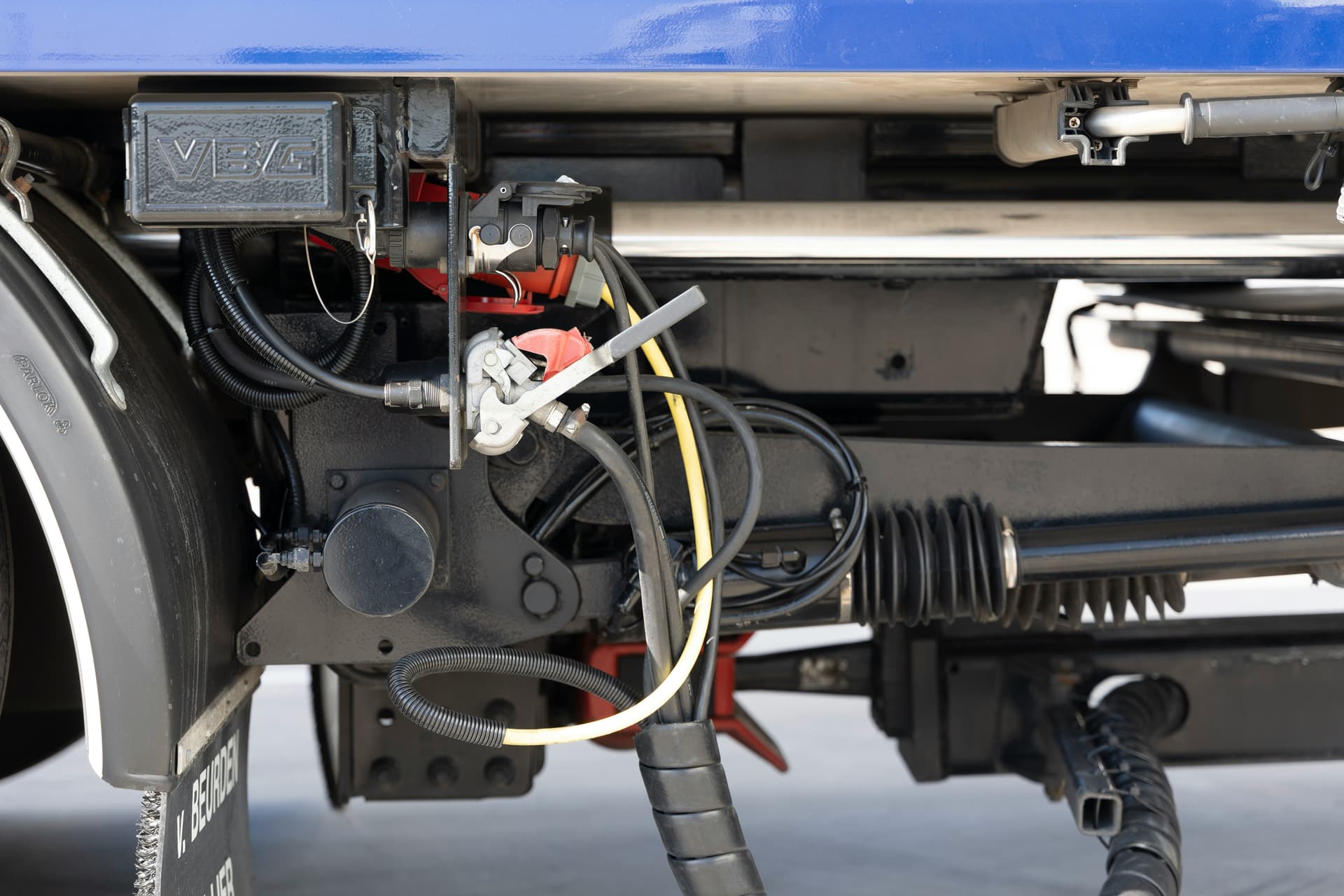
If you are wondering how often should a tail lift be inspected, the usual legal interval for a goods-only tail lift used at work is every 12 months under LOLER. A six-month interval normally applies if the equipment is designed or used to lift people. A competent person can specify different intervals through a written examination scheme, and an additional examination may be required after damage, significant alteration or another exceptional event.
That is the short answer, but it is only part of the dutyholder’s responsibility. A statutory thorough examination is not the same as servicing the tail lift, completing an operator’s pre-use check or inspecting the wider vehicle under PUWER.
How often should a tail lift be inspected under LOLER?
Unless a competent person has prepared an examination scheme specifying a different interval, the normal maximum periods between thorough examinations are:
Equipment or useNormal LOLER intervalTail lift used only to lift goods12 monthsTail lift designed or used to lift people6 monthsLifting accessories used with the tail lift6 monthsEquipment covered by a written examination schemeAt the intervals stated in the schemeEquipment affected by exceptional circumstancesBefore it returns to service, where examination is required
These are statutory thorough-examination intervals, not recommended servicing intervals.
The Health and Safety Executive explains that lifting equipment used to lift people and all lifting accessories should normally be thoroughly examined every six months. Other lifting equipment should normally be examined every 12 months. An alternative interval can be used where a competent person has established an appropriate written examination scheme.
A shorter interval may be appropriate when a tail lift:
-
receives particularly heavy or frequent use
-
operates in a corrosive, dirty or otherwise demanding environment
-
regularly handles loads close to its rated capacity
-
has a history of defects or abnormal deterioration
-
is used in circumstances where failure could have especially serious consequences
-
is subject to an interval specified by its manufacturer or competent person
The calendar interval should therefore be treated as the maximum default period, not an assurance that the equipment needs no attention in between.
Does LOLER apply to vehicle tail lifts?
A tail lift used at work to raise or lower a load will normally be lifting equipment for the purposes of the Lifting Operations and Lifting Equipment Regulations 1998, commonly known as LOLER.
The duties can apply to businesses that own, operate or control the equipment. This may include:
-
transport and logistics companies
-
delivery operators
-
retailers and wholesalers
-
removal companies
-
vehicle rental and leasing businesses
-
facilities and warehouse operators
-
contractors using vehicles fitted with tail lifts
-
self-employed people who use lifting equipment at work
LOLER requires lifting equipment to be suitable for its intended use, properly marked and used through properly planned and supervised lifting operations. It also requires relevant equipment to undergo periodic thorough examination.
Most workplace tail lifts are also work equipment, so the Provision and Use of Work Equipment Regulations 1998, or PUWER, will usually apply as well. The HSE’s LOLER overview confirms that lifting equipment is commonly subject to both sets of regulations.
In practical terms, LOLER is concerned specifically with lifting risks, while PUWER addresses the broader safety, suitability, maintenance and use of the work equipment. Compliance with one does not remove the duties created by the other.
Safe-Lee provides both LOLER inspections and PUWER inspections, allowing the lifting mechanism and the wider work-equipment risks to be considered appropriately.
Thorough examination, servicing and routine inspection are different
One of the most common sources of confusion is the use of the word “inspection” for several different activities. They are related, but they are not interchangeable.
Thorough examination under LOLER
A thorough examination is a systematic and detailed examination of the tail lift and its safety-critical parts. It must be completed by a competent person, who then produces a written report.
Its purpose is to identify defects or deterioration that could affect the equipment’s continued safe use. Depending on the tail lift, its condition and the competent person’s professional judgement, the examination may involve:
-
visual examination
-
functional checks
-
assessment of safety-critical components
-
measurements of wear or deterioration
-
examination of hydraulic and mechanical parts
-
checks of controls and safety devices
-
testing where the competent person considers it necessary
-
partial dismantling or further investigation where a concern cannot otherwise be assessed
A thorough examination is not simply a quick visual check or a certificate issued because the tail lift operated when a button was pressed.
Servicing and maintenance
Servicing is intended to keep the equipment in a safe and efficient working condition. It may include lubrication, adjustment, fluid checks and the replacement of worn or scheduled components.
Maintenance is required under PUWER and should be completed at intervals that reflect:
-
the manufacturer’s instructions
-
frequency and intensity of use
-
operating conditions
-
the tail lift’s age and condition
-
previous defects and repairs
-
the findings of risk assessments and examinations
Some operators arrange servicing every six months even when the statutory thorough-examination interval for a goods-only tail lift is 12 months. That can be a sensible maintenance programme, but it does not automatically change the LOLER interval or replace the thorough examination.
The HSE is explicit that regular servicing does not remove the requirement for a thorough examination.
Operator pre-use checks
A trained operator should check the tail lift before use or at another suitable frequency established by the employer’s risk assessment and instructions.
These checks are intended to identify visible or functional problems before a lifting operation begins. They are not thorough examinations, and operators should not be expected to assess concealed components or defects outside their training.
PUWER inspections
A PUWER inspection may be required where deterioration could create a significant risk and that risk is not adequately addressed through routine checks and maintenance.
Its scope may extend beyond the lifting parts to matters such as controls, guarding, stability, access, warning systems and the way the equipment is integrated with the vehicle and used by employees.
Can a service and a thorough examination be completed together?
They can be scheduled for the same visit, but they remain separate activities with different purposes.
The person carrying out the thorough examination must possess sufficient practical and theoretical knowledge and experience to detect defects and assess their significance. They must also be sufficiently independent and impartial to reach an objective decision.
The HSE advises that the competent person carrying out the thorough examination should not be the same individual who performed the routine maintenance, because that person would effectively be assessing their own work.
Using the same company for maintenance and examination is not automatically prohibited. The important issues are the competence, independence and impartiality of the person undertaking the statutory examination.
A business should also receive a proper report of thorough examination. A service sheet, maintenance invoice or sticker showing the next service date is not necessarily evidence that the LOLER examination has been completed.
What should be examined on a tail lift?
The precise scope is determined by the competent person after considering the equipment’s type, design, use, condition and known deterioration mechanisms.
Relevant areas may include:
-
platform structure and surface
-
platform hinges, pivots and pins
-
lifting arms and supporting structures
-
hydraulic cylinders, hoses and connections
-
chains, cables or other load-bearing parts where fitted
-
mounting points and the connection to the vehicle
-
controls, emergency controls and isolation arrangements
-
guards and protection against trapping or crushing
-
roll stops, bridge plates or edge protection where fitted
-
stowage arrangements and mechanical locks
-
warning lights, audible warnings or visibility markings
-
safe working load markings
-
evidence of corrosion, cracking, distortion or unauthorised repair
-
safety devices intended to prevent uncontrolled movement
-
any accessory forming part of the lifting operation
This does not mean every component will require the same examination method at every visit. The competent person decides what is needed to reach a reliable conclusion about continued safe use.
Routine overload testing is not automatically required at every thorough examination. The HSE notes that unnecessary overload testing can itself damage equipment. The decision to test should be based on risk, the manufacturer’s information, the equipment’s condition and the professional judgement of the competent person.
When might an additional examination be needed?
Waiting until the next scheduled date may not be appropriate if something happens that could affect the tail lift’s safety.
An additional thorough examination may be necessary following exceptional circumstances such as:
-
collision or impact damage
-
structural distortion
-
failure of a load-bearing or safety-critical part
-
uncontrolled or unexpected platform movement
-
a significant hydraulic failure
-
major modification
-
replacement or repair of a safety-critical component
-
prolonged disuse
-
a substantial change in operating conditions
-
an accident or dangerous occurrence involving the equipment
The equipment should be isolated where necessary and assessed before it returns to service. A repair invoice alone does not always demonstrate that the complete lifting system is safe to use.
If there is uncertainty, the dutyholder should obtain advice from a competent person rather than waiting for the existing examination date.
What should operators check before using a tail lift?
The employer should provide a suitable check procedure based on the manufacturer’s instructions, risk assessment and the particular tail lift.
A pre-use check may include confirming that:
-
the platform and lifting arms show no obvious damage or distortion
-
hinges, pins and visible securing devices appear to be in place
-
there are no obvious hydraulic leaks
-
controls operate as intended and are not damaged
-
the platform moves smoothly without abnormal noise or erratic movement
-
guards and safety devices are present
-
roll stops or load-retaining features operate correctly
-
the platform can be secured safely in its travelling position
-
warning lights, markings and visibility aids are serviceable
-
the safe working load is visible
-
the working area is clear of people and obstructions
-
the ground and vehicle position are suitable for the operation
Operators should know what action to take when a defect is found. That generally means stopping use, securing the equipment, reporting the concern and preventing the tail lift from being returned to service until it has been assessed.
A pre-use checklist becomes ineffective if defects are repeatedly recorded without anyone being responsible for acting on them.
Can people travel on a tail lift?
A standard goods tail lift should not be treated as equipment for lifting people merely because someone can physically stand on its platform.
The HSE states that machinery intended to lift people should be clearly identified by the manufacturer. Equipment not designed for lifting people should only be used for that purpose in exceptional circumstances and with additional precautions.
Some specialist tail lifts are specifically designed to lift passengers, wheelchair users or operators. Where a tail lift is designed or used to lift people, the normal thorough-examination interval is six months unless an appropriate examination scheme specifies otherwise.
The equipment’s instructions, intended use and design must be checked. Businesses should not assume that every tail lift is suitable for carrying an operator between levels.
Who is responsible when the vehicle is hired or leased?
Hiring or leasing a vehicle does not necessarily transfer every legal responsibility away from the business using it.
The allocation of responsibilities may depend on:
-
who owns the vehicle
-
who controls the tail lift
-
the hire or lease agreement
-
who arranges maintenance and examinations
-
how long the vehicle is hired
-
who employs the operator
-
who controls the lifting operation
Before using a hired vehicle, the user should confirm that the tail lift has a current report of thorough examination and that any defects or restrictions have been addressed. The report should relate to the actual equipment, which means identification details must be checked rather than relying solely on a sticker.
The employer controlling the work must still ensure that operators are trained, the lifting operation is properly managed and the equipment is suitable for the intended load.
What should a LOLER report contain?
A report of thorough examination must contain the information required by LOLER. This includes sufficient identification of the equipment, the examination date, the date by which the next examination is due and details of relevant defects.
The report should make it clear:
-
which tail lift was examined
-
who carried out the examination
-
when and where it was examined
-
the examination scheme or statutory interval used
-
what defects were identified
-
whether any defect presents an existing or potential danger
-
what action is required
-
when the next thorough examination is due
Safe-Lee’s report-writing service supports businesses that require clear, practical inspection documentation.
Where a defect presents an immediate danger, the equipment must not continue to be used until the defect has been remedied. Other defects may have a specified timescale for action. The report should not simply be filed away without being reviewed.
The HSE’s guidance on thorough examinations and inspection reports explains the reporting and defect-management requirements in more detail.
Common tail-lift compliance mistakes
Treating the service date as the LOLER date
A maintenance sticker does not prove that a statutory thorough examination has taken place. Check the written report and equipment identification.
Assuming every tail lift must be examined every six months
Six months is the normal interval for equipment used to lift people and for lifting accessories. A goods-only tail lift normally falls under the 12-month interval unless a competent person’s examination scheme specifies otherwise.
A six-month service schedule may still be appropriate, but it is not the same thing.
Waiting for the annual examination before reporting damage
A collision, hydraulic failure, distorted platform or damaged mounting should be reported immediately. A scheduled examination is not a substitute for responding to a known defect.
Using a goods tail lift to carry people
The equipment must be suitable for its intended use. Do not assume that a goods platform can safely be used as a passenger lift.
Ignoring the vehicle connection
A tail lift depends on its secure attachment to the vehicle. Corrosion, cracking, distortion or poor repairs around mounting points can be as significant as faults in the platform itself.
Overlooking lifting accessories
Chains, slings or other detachable lifting accessories used as part of the operation normally have their own six-month thorough-examination requirement.
Failing to control the working area
A mechanically sound tail lift can still be used unsafely. Crushing zones, vehicle movement, unstable loads, pedestrians and unsuitable ground conditions must all be controlled.
Practical steps for managing tail-lift examinations
A reliable system should include:
-
Identify every tail lift by vehicle registration, fleet number, manufacturer, model and serial number where available.
-
Record whether it is intended for goods only or designed to lift people.
-
Establish the applicable examination interval or obtain a written examination scheme.
-
Keep thorough-examination dates separate from servicing and maintenance dates.
-
Schedule work early enough to avoid equipment becoming overdue.
-
Give operators a clear pre-use check and defect-reporting process.
-
Remove unsafe or overdue equipment from service.
-
Review every examination report and allocate responsibility for corrective action.
-
Retain reports so they can be produced when required.
-
Arrange an additional assessment after damage, major repair or exceptional circumstances.
For mixed fleets, a register can help distinguish statutory examinations from maintenance, vehicle inspections and other compliance dates.
Does a current LOLER report prove the tail lift is safe today?
Not by itself.
A report records the findings at the time of the examination. Damage, misuse, deterioration or component failure can occur afterwards. Continued safety depends on maintenance, appropriate use, operator checks and prompt action when defects arise.
The thorough examination is an important independent check, but it forms part of a wider system rather than replacing it.
Arranging a tail-lift thorough examination
For a goods-only tail lift, the normal LOLER interval is 12 months unless a competent person’s examination scheme specifies another period. Tail lifts designed or used to lift people are normally examined every six months.
Businesses should also maintain the equipment, complete suitable checks between examinations and respond promptly to damage or defects.
Safe-Lee Inspection & Consultancy provides independent examinations of lifting equipment for businesses in Manchester, across the North West and for multi-site clients throughout the UK. To discuss a tail lift, examination schedule or existing report, contact Safe-Lee.